
Introduction
Cloud computing has transformed the way businesses build and operate their technology platforms. With benefits such as scalability, flexibility, and cost efficiency, cloud services-particularly Amazon Web Services (AWS)-have become the foundation for many modern applications.
However, moving entirely to the cloud is not always the right approach for every organization.
Many businesses still rely on existing on-premise systems for critical workloads, regulatory compliance, or operational stability. In these situations, the most effective solution is often a hybrid cloud architecture, where on-premise infrastructure and cloud services work together seamlessly.
At DigitalCloudAdvisor (DCA), we help organizations design hybrid cloud strategies that allow them to modernize their systems gradually while maintaining stability and control over their existing infrastructure.
What Is Hybrid Cloud?
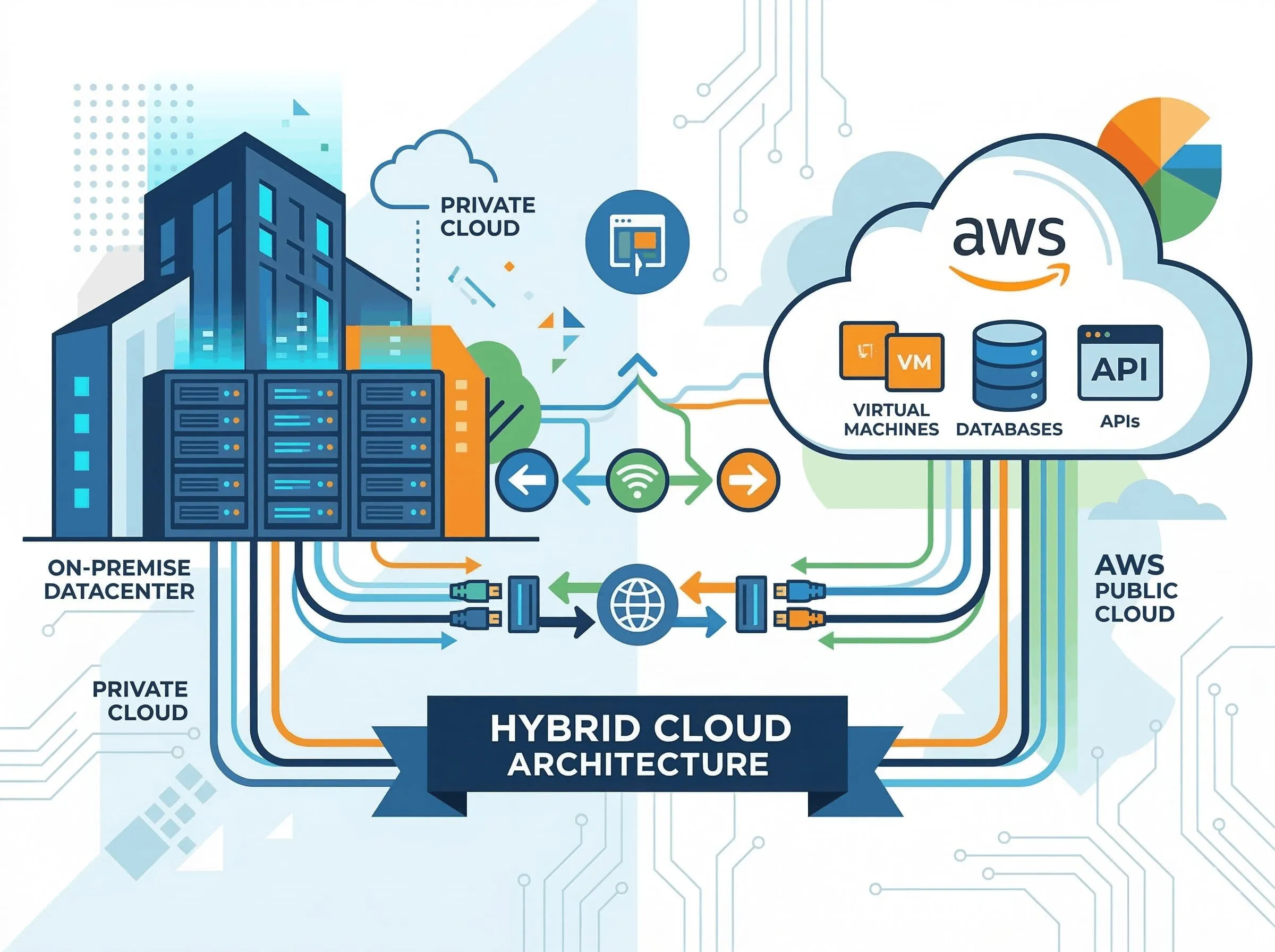
A hybrid cloud architecture combines on-premise infrastructure with cloud services such as AWS. This approach allows businesses to keep certain systems running locally while leveraging the cloud for scalability, analytics, and innovation.
In a hybrid setup, workloads can be distributed between environments depending on factors such as:
- performance requirements
- data sensitivity
- regulatory constraints
- operational flexibility
Rather than forcing a full migration, hybrid cloud allows businesses to adopt cloud technologies at their own pace.
Why Some Businesses Still Need On-Premise Systems
Despite the advantages of cloud computing, there are legitimate reasons why some organizations maintain on-premise infrastructure.
-
Regulatory and Compliance Requirements: Industries such as healthcare, finance, and government often face strict data residency and compliance regulations that require certain systems to remain on local infrastructure.
-
Legacy Systems: Many organizations operate critical legacy applications that were not originally designed for cloud environments. Rebuilding or replacing these systems can take time and careful planning.
-
Performance Considerations: Some workloads require extremely low latency or local processing capabilities that may be better suited for on-premise infrastructure.
-
Operational Stability: Businesses may prefer to maintain existing systems that are already stable while gradually introducing cloud capabilities.
The Benefits of Hybrid Cloud
Hybrid architectures offer several advantages that allow organizations to balance innovation with operational continuity.
Gradual Cloud Adoption
Hybrid environments allow businesses to modernize their infrastructure step by step rather than undergoing a disruptive full migration.
Flexibility and Workload Optimization
Organizations can place workloads in the environment that best suits their needs.
For example:
- sensitive data may remain on-premise
- analytics workloads can run in the cloud
- backup and disaster recovery systems can be hosted on AWS
Cost Optimization
Hybrid cloud enables businesses to leverage cloud resources when needed while continuing to use existing infrastructure investments.
Improved Disaster Recovery
Cloud platforms provide powerful tools for backup, replication, and failover, helping organizations maintain business continuity even during infrastructure failures.
AWS Services That Enable Hybrid Cloud Architectures
AWS offers several services designed specifically to support hybrid environments.
✅ AWS Storage Gateway
Storage Gateway connects on-premise systems with cloud storage, allowing businesses to back up and archive data securely in AWS.
✅ AWS Direct Connect
Direct Connect provides a dedicated network connection between an organization’s infrastructure and AWS, enabling secure and high-performance communication.
✅ AWS Site-to-Site VPN
VPN connections allow businesses to securely connect their local networks with AWS environments over encrypted channels.
✅ AWS Backup
AWS Backup enables organizations to centrally manage and automate backup processes for both cloud and on-premise resources.
These tools allow businesses to create integrated environments where on-premise infrastructure and cloud services operate as a single system.
Hybrid Cloud in Practice
Many organizations use hybrid architectures in practical and effective ways.
Some common use cases include:
-
Cloud-Based Backup and Disaster Recovery: Businesses replicate their on-premise data to AWS, ensuring systems can be restored quickly in case of outages or data loss.
-
Cloud Analytics: Operational systems remain on-premise while business intelligence tools and analytics platforms run in the cloud.
-
Development and Testing Environments: Organizations often use cloud infrastructure for development environments while production systems remain on local servers.
-
Gradual Cloud Migration: Hybrid architectures allow businesses to migrate workloads to the cloud progressively as systems are modernized.
Why Hybrid Cloud Is a Strategic Approach for SMBs
For small and medium-sized businesses, hybrid cloud offers a balanced path toward modernization.
Instead of committing to large infrastructure changes immediately, organizations can:
- extend existing systems with cloud capabilities
- introduce automation and analytics gradually
- reduce operational risks during migration
This approach allows SMBs to benefit from cloud innovation without disrupting their existing operations.
How DigitalCloudAdvisor Supports Hybrid Cloud Strategies
At DigitalCloudAdvisor, we understand that every business operates differently. Our goal is not to force a one-size-fits-all cloud strategy, but to design solutions that align with each organization’s operational needs and long-term goals.
Our hybrid cloud services include:
- cloud readiness assessments
- hybrid infrastructure design
- secure connectivity implementation
- backup and disaster recovery strategies
- gradual cloud migration planning
By combining AWS best practices with deep operational expertise, we help businesses create hybrid architectures that support both innovation and stability.
Final Thoughts
The journey to the cloud does not need to happen overnight.
Hybrid cloud architectures allow businesses to modernize their infrastructure in a controlled and strategic way, combining the reliability of existing systems with the flexibility and innovation of cloud platforms like AWS.
For organizations seeking a balanced approach to modernization, hybrid cloud offers a powerful solution that supports growth while maintaining operational continuity.
With the right architecture and expert guidance, businesses can confidently navigate the path toward a more flexible and future-ready IT environment.
✅ Interested in exploring hybrid cloud solutions for your business?
DigitalCloudAdvisor helps organizations design secure and scalable architectures that combine on-premise infrastructure with the power of AWS.
👉 Learn more at: AWS Migration Services - Seamless Cloud Transition | DigitalCloudAdvisor | DCA